Wet leaves, low sun, short days – why the risk of slipping and tripping is increasing now and which six routines help you avoid accidents
Autumn doesn't bring entirely new dangers to the construction site – but it exacerbates known risks: wet foliage can increase the risk of slipping, damp surfaces dry more slowly, and leaves obscure cables, edges, or unevenness. At the same time, twilight and low-hanging sun obstruct visibility. Slipping, tripping, and falling are major accident risks at work. With appropriate safety shoes, suitable eye protection, and six simple routines, you can help reduce these risks.
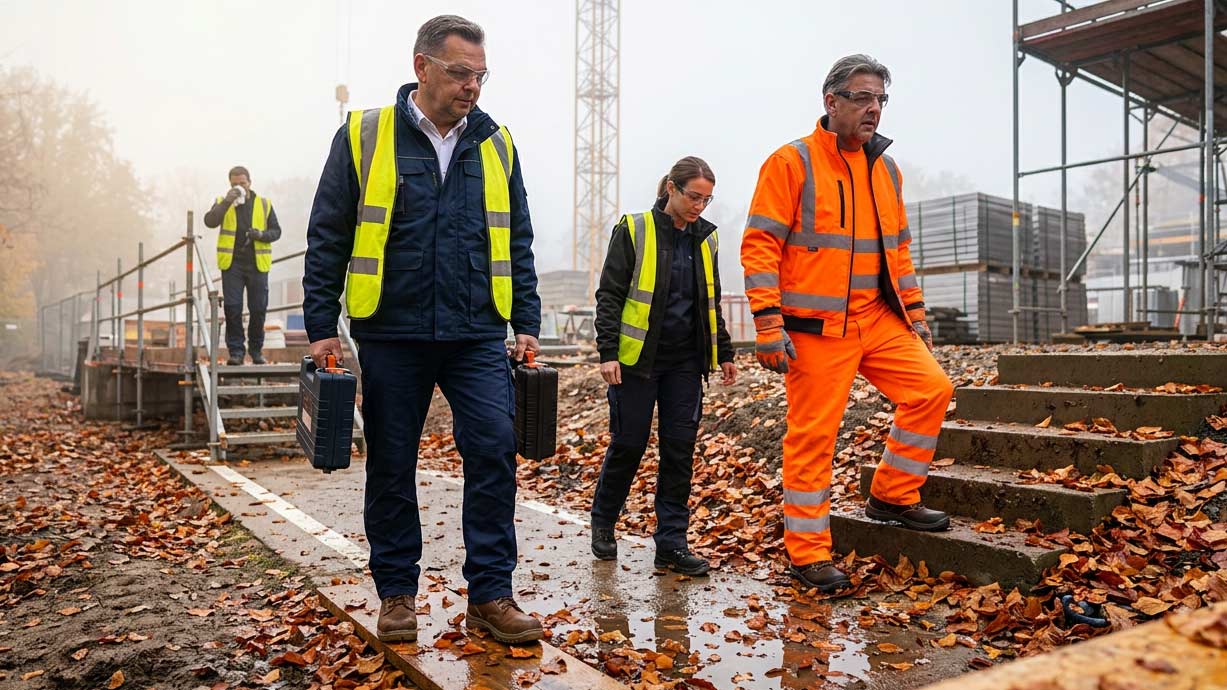
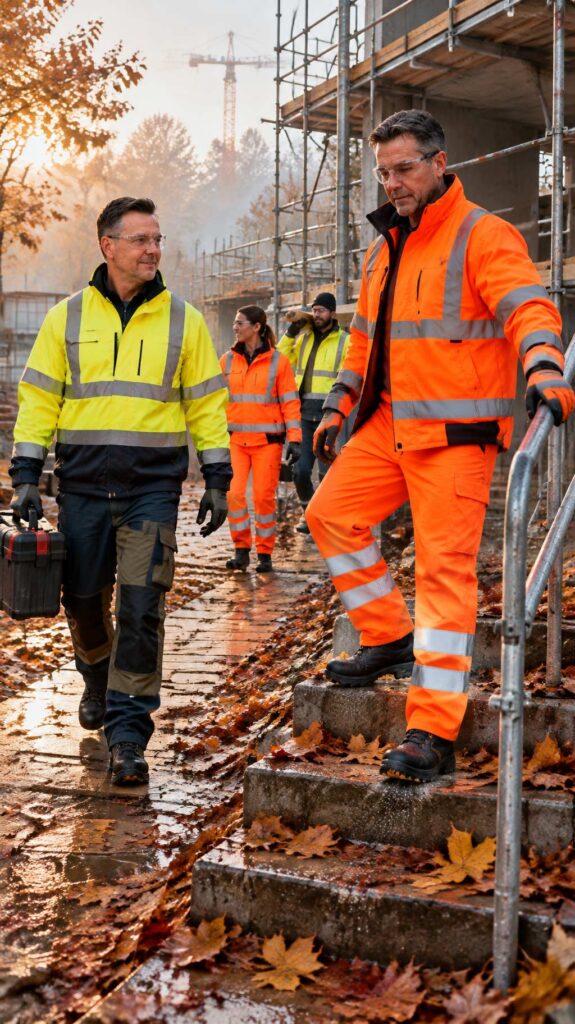
Seven o'clock in the morning on the construction site. The air is cool, the sky is still grey, and overnight the wind has scattered loads of leaves across the site. On the way to the container, everything looks harmless: a few colorful leaves on the planks, a puddle next to the scaffolding. Then a single step with the heavy tool case in hand is all it takes for your foot to slip. Most of the time, it just barely goes well. Sometimes, though, it doesn't.
Exactly moments like these make autumn one of the most underestimated seasons in occupational safety. The risk of slipping in autumn rarely arises from a single major hazard – but rather from many small ones that come together. Let's take a look at them.
Why autumn is so treacherous 
Wet foliage acts like a lubricating film. The leaves lie loosely on top of each other, soak up water and simply give way under pressure. On wooden planks, metal grates, stairs or smooth panels, this quickly turns into a slippery slide. The moisture remains. Rain, morning dew and fog ensure that surfaces hardly dry out properly in autumn. Clay and mud are carried across the entire site on shoes – also on ladders, ramps and vehicle steps.
The foliage hides what you need to see. Cables, hoses, edges, potholes, lying material: what was recognizable at a glance in summer is now hidden under a layer of leaves.
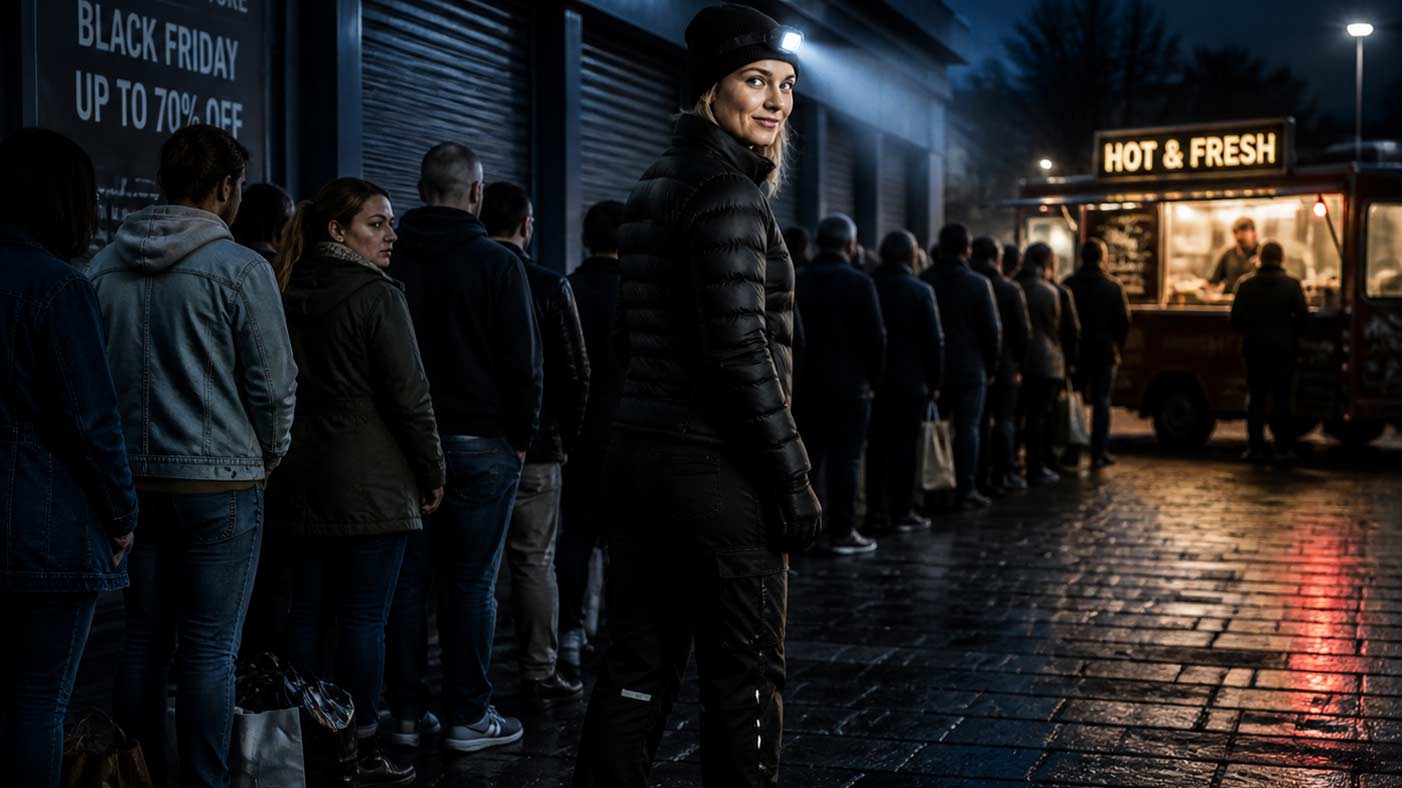
And the light no longer plays along. The days are getting shorter, and work is done in the twilight in the mornings and evenings. At the sun is low and glaring - especially after a rain shower, when wet surfaces additionally reflect the light. Anyone who is dazzled won't see the tripping hazard right in front of their feet.
Slips, trips, and falls have been among the most common causes of work-related accidents for years. In autumn, many of these factors come together - and that is precisely why it is worth taking a look at the following six routines now.
Practical tips: How to get safely through autumn 
1. Honestly check safety shoes 
The right foot protection is an important building block against the risk of slipping in autumn. Look closely at your soles: Is the tread still sufficiently pronounced or are the lugs already worn down? Caked-on mud and dirt can also impair grip.
For outdoor work, depending on the risk assessment, safety shoes of categories S3, S3L or S3S, for example, are suitable. Among other things, they offer protection against water penetration into the upper material and penetration resistance. Which design is suitable depends on the specific hazards.
The standard for safety shoes contains a basic requirement for slip resistance. The additional symbol "SR" stands for a supplementary slip resistance test on a ceramic tile with glycerin. However, it is not a guarantee of a secure grip on every surface. Especially on wet leaves, mud, or uneven areas, a suitable sole profile and careful walking remain important.
2. Keep soles clean 
Clay and wet leaves get stuck in the tread and render even the best sole ineffective. A quick stop at a scraper or a few stomps against an edge work wonders—especially before you step onto a ladder or scaffold.
3. Keep walkways clear 
Regularly remove leaves from entrances, stairs, scaffolding decks, and ramps. This is not cosmetic, but accident prevention. Bundle cables and hoses whenever possible and keep them out of main pathways.
4. Adapt eye protection to the season 
Low sun and reflections on wet surfaces can impair visibility. Choose eye protection that matches the lighting conditions and the hazards of your activity. Tinted lenses can be useful in bright light, while sufficient light transmission is important in cloudy weather and at dusk.
In damp, cool weather, make sure to use suitable anti-fog lenses. Coatings and markings provide information about specific characteristics; the marking of the respective safety glasses and the manufacturer's instructions are decisive. The current standard series for professional eye and face protection is EN ISO 16321.
When leaf blowing, clearing, or cleaning up, leaves, twigs, and other particles can get into the eye. Choose eye protection that covers the hazards involved and wear it during the corresponding work.
5. Walk slower, keep hands free 
Sounds trivial, but makes all the difference: shorter steps, use the handrail, carry heavy loads twice rather than once with restricted visibility. If your hands are full, you cannot catch yourself if you slip.
6. Create lighting 
Where work is carried out at dusk, walkways, stairs, and transitions must be adequately illuminated. This makes it easier to spot obstacles and uneven surfaces. Still, keep paths clear and eliminate tripping hazards – good lighting alone does not prevent accidents.
Conclusion: Small actions, big difference
Autumn does not bring completely new hazards to the construction site, but it intensifies known risks. Wet leaves, damp surfaces, and hidden unevenness increase the danger of slipping and tripping. With suitable safety shoes, appropriate eye protection, clear traffic routes, and sufficient lighting, you can help reduce the risk of accidents.
It is the small steps that help ensure you return home in the evening just as you left in the morning.
Protect yourself. Love yourself. – Your Protection Pros
Frequently Asked Questions
Why is the risk of slipping particularly high in autumn?
Wet leaves, damp ground, mud, and hidden unevenness can increase the risk of slip and trip accidents. Twilight and low-hanging sun additionally impair visibility. Clear walkways, adequate lighting, and suitable footwear help reduce these risks.
Which safety shoes are suitable for autumn on the construction site?
Which safety shoes are suitable depends on the activity and the risk assessment. For outdoor work, for example, shoes of categories S3, S3L, or S3S come into question. Sufficient sole tread and clean running surfaces are also important. The additional marking SR stands for a supplementary slip-resistance test, but does not guarantee a secure grip on every surface.
What should I look for when choosing safety glasses in the fall?
Eye protection must match the lighting conditions and the hazards of the respective activity. Tinted lenses can be useful in strong brightness, clear lenses in poor lighting conditions. In humid weather, an anti-fog coating can be helpful. Pay attention to the marking of safety glasses and the manufacturer's instructions regarding the standard and protective properties.
What is an important immediate measure against slip accidents?
Keep walkways and stairs free of leaves and other obstacles. Clean soiled shoe soles regularly and adjust your walking speed to the conditions. Dangerous areas should be cleared or, if necessary, cordoned off and marked.
Does lighting really help prevent tripping accidents?
Yes, adequate lighting improves the visibility of obstacles and uneven surfaces. However, it does not replace keeping traffic routes clear and secure. Especially at dusk, walkways, stairs, and crossings should be sufficiently lit.