
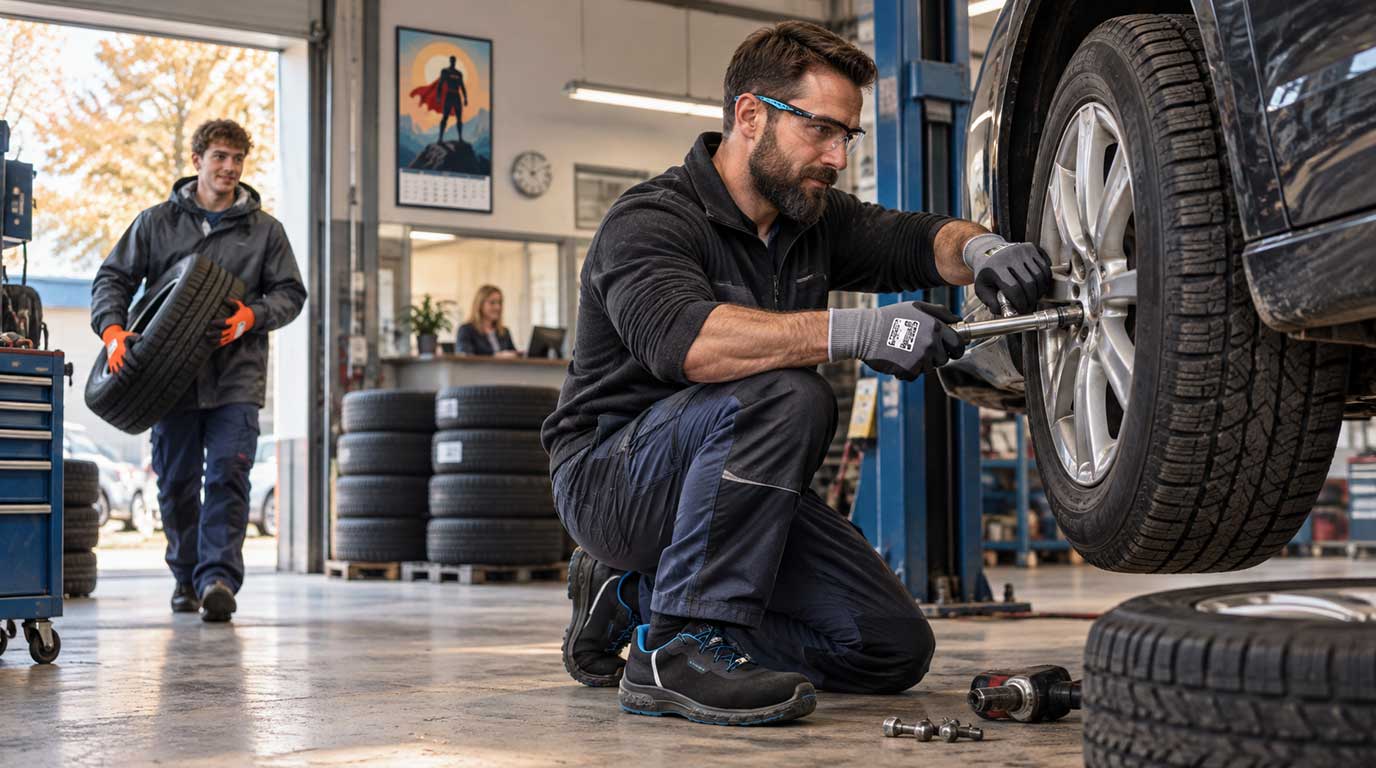
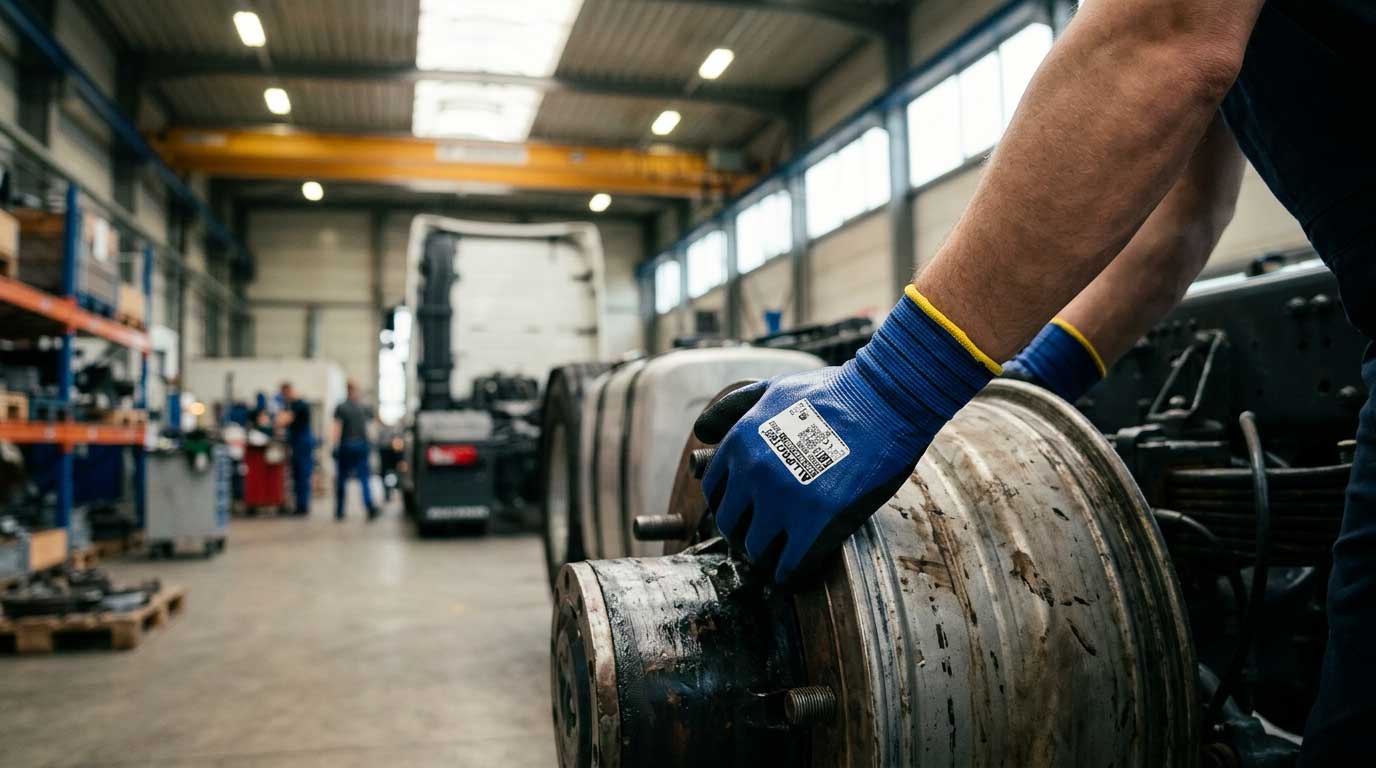
Just as varied as the working day, the appropriate foot protection can be just as diverse
The working day does not always start the same way.
Sometimes it's out into the cold early in the morning, sometimes a warm production hall awaits. Sometimes water and dirt are part of everyday work, sometimes the path only leads briefly through a warehouse or a production facility. And sometimes, one thing is above all required: a shoe that is still comfortable to wear even after many hours.
Why should the same safety shoe be suitable for all these situations?
That's precisely why the range of safety and work shoes is so diverse. Different activities, environments, and personal requirements demand different solutions.
We present six models that could hardly be more different – and that's exactly why they give a good impression of how diverse foot protection can be.
When summer arrives: the safety sandal
When temperatures rise, many people welcome any opportunity to get some air to their feet. In warm work areas, a safety sandal can therefore be an interesting alternative to closed safety shoes.
The open design allows for better ventilation, while the integrated toe cap can offer the necessary protection – provided the sandal is suitable for the specific application.
Whether in warm indoor areas, during assembly work, or in summer: The safety sandal shows that safety and comfort do not necessarily have to be opposites.
When water and dirt are part of everyday work: the S5 boot
Now it gets wet. Where water, mud, and dirt are part of everyday work, normal work shoes quickly reach their limits. This is where a safety boot shows its strengths.
In agriculture, gardening and landscaping, on construction sites, or during work around sewers and drainage, S5 safety boots can be a suitable solution. Depending on the version, they combine waterproofness with toe protection, puncture resistance, and other protective features. A shoe for days when dry weather is more of an exception.
When you just need to pop into the factory for a moment: the visitor overshoe
Not everyone who enters company premises works there all day. Customers, suppliers, auditors, or other visitors may only need additional foot protection for a short time. For this, visitor overshoes with toe protection can be a practical solution: they can be pulled over existing footwear, allowing uncomplicated access to certain work areas.
Especially for companies, this can be an easy way to provide visitors with suitable foot protection at short notice. It is also important here: Which protection solution is required depends on the respective area and the hazards existing there.
When fit plays a special role: the women's safety shoe
Safety shoes must protect - but they must also fit. Because feet are different. And especially for women, a specially cut safety shoe can offer a better fit than a classically constructed unisex shoe.
A women's safety shoe combines the required protective features with a construction tailored to the female foot shape. This can make a noticeable difference when a shoe is worn for many hours a day. Because a safety shoe should not only be safe. It should also fit into the working day as well as possible.
When a reliable all-rounder is needed: the S3 safety shoe
Then there are situations where a classic safety shoe is required. The S3 safety shoe is one of the well-known all-rounders among safety shoes. Depending on the specific design, it offers toe protection, penetration resistance, and other features for use in various work areas, among other things.
Whether in trade, assembly, industry, or logistics: An S3 shoe can be a suitable solution in many work environments – provided its specific features match the risk assessment.
And nowadays, a safety shoe no longer has to look like a classic work boot. Athletic designs and modern fits make the selection larger than ever.
When temperatures drop: the winter boot
And then winter arrives. Anyone working on construction sites, in landscaping, in winter maintenance, or regularly outdoors knows the challenge: cold, wetness, and long working days place special demands on foot protection.
A winter safety shoe or safety boot combines protection features with warming properties, depending on the model. This ensures feet remain protected and pleasantly warm even at low temperatures, because cold feet do not make a working day any more pleasant.
Just as the safety sandal shows its strengths in summer, the season for winter boots begins when temperatures drop outside.
The choice makes all the difference
Six shoes, six different situations – and yet they have something in common: the right foot protection depends on the application. Therefore, there is not just one safety shoe that is equally suited for every activity, every weather condition, and every person.
In addition to the required protection class, factors such as fit, size, wearing comfort, area of application, and personal preferences also play a role. This is precisely why making a choice can sometimes be a challenge.
At Omniprotect you will therefore find a large selection of safety and work shoes from various brands, in various designs and styles. From sporty safety shoes to robust boots, from women's models to solutions for special areas of application. You already know what you are looking for? Then you can browse specifically for the right model. You are unsure about the size? Our size advisor will support you in your selection.
Or you don't know exactly yet which shoe fits your everyday work? Then you can get help with your selection - personally by our team or digitally via our AI. Because in the end it's not about finding just any safety shoe. It's about finding one that fits you and your everyday work.
Frequently asked questions about safety and occupational shoes
Why are there different safety shoes?
Not every task places the same demands on foot protection. Depending on the work area, protection against moisture, cold, penetration, or mechanical impacts, as well as a specific fit or low weight, may be important.
Which safety shoe suits my work area?
This depends on the specific activity and the existing hazards. The risk assessment specifies which protective features are required. Only then should the appropriate model be selected.
When is a safety sandal useful?
A safety sandal can be interesting for warm work areas if toe protection is required at the same time and better ventilation is desired. Whether it is suitable for a specific activity depends on the hazards present there.
When do I need an S5 safety boot?
S5 safety boots are particularly relevant for work areas where protection against moisture, mechanical impacts, and penetration is required, among other things. The specific requirements should always be checked based on the activity and risk assessment.
What is a visitor overshoe?
A visitor overshoe is pulled over existing footwear and can provide visitors with short-term additional foot protection. Which design is required depends on the respective work area and the safety requirements applicable there.
Are there safety shoes specifically for women?
Yes. Women's safety shoes are specially tailored to the female foot shape and can therefore be a suitable alternative to classic unisex models. A good fit is particularly important when the shoe is worn for many hours.
What characterizes an S3 safety shoe?
S3 safety shoes are among the commonly used safety shoes and, depending on the current standard version, feature defined protective characteristics such as toe protection and puncture resistance. The specific properties should be checked before selection.
When is a winter safety shoe useful?
When working at low temperatures, a warming safety shoe or safety boot can be useful. Depending on the model, additional protection against moisture and other safety-relevant properties may be included.
How do I find the right size for safety shoes?
The right size and fit are crucial for comfortable and safe wear. The Omniprotect size advisor can assist with the selection. In addition, the respective manufacturer specifications regarding fit should be taken into account.