
Zusatzkennzeichnungen bei Sicherheitsschuhen – was die Kürzel wirklich bedeuten
Schütz dich. Lieb dich.
Kennst du das?
Du schaust auf deine Sicherheitsschuhe und siehst neben der Schutzklasse (z. B. S3 oder S5) zusätzliche Kürzel wie HI, P, WR oder LG.
Diese kleinen Buchstaben haben es in sich. Sie erklären, wofür dein Schuh wirklich geeignet ist. Hier bekommst du eine klare, praxisnahe Übersicht über die Zusatzkennzeichnungen nach EN ISO 20345:2022. Damit du im Arbeitsalltag weißt, welchen Schutz du am Fuß trägst und ob das Modell wirklich zum Einsatz passt.
Warum Zusatzkennzeichnungen wichtig sind
Die Schutzklassen S1 bis S7 definieren die Grundanforderungen an Sicherheitsschuhe. Dazu gehören unter anderem die Zehenschutzkappe, antistatische Eigenschaften und ein geschlossener Fersenbereich.
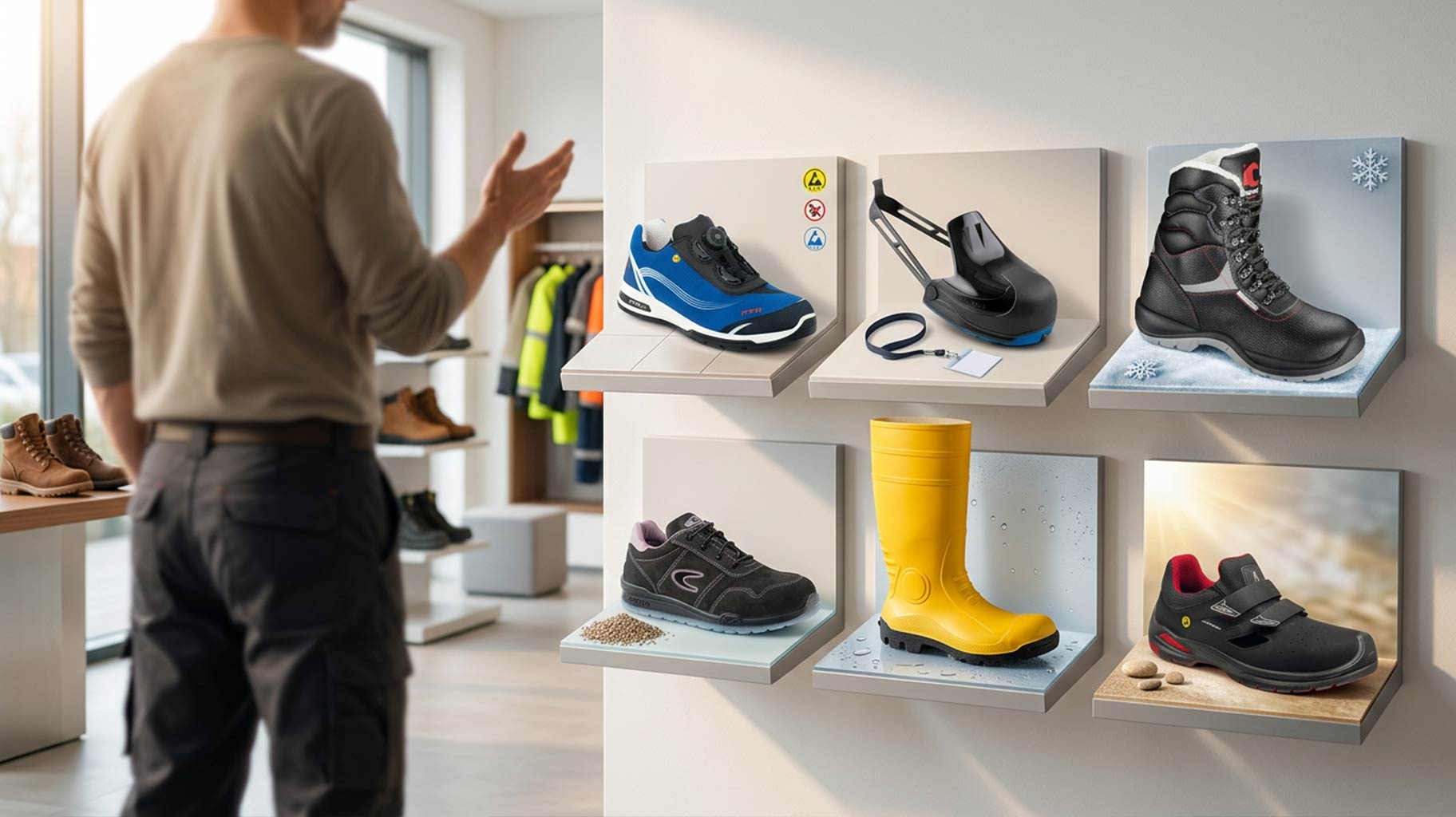
Viele Arbeitsplätze stellen jedoch zusätzliche Anforderungen. Hitze, Kälte, Feuchtigkeit, scharfkantige Untergründe oder Arbeiten auf Leitern erfordern mehr als den Basisschutz. Genau hier kommen Zusatzkennzeichnungen ins Spiel.
Diese Kürzel geben unter anderem Auskunft darüber,
- ob der Schuh durchtrittsicher ist,
- wie gut er gegen Hitze oder Kälte isoliert,
- ob er wasserdicht ist,
- ob er rutschhemmend geprüft wurde,
- ob Mittelfuß, Knöchel oder Obermaterial zusätzlich geschützt sind.
Wer diese Kennzeichnungen versteht, kann gezielter beschaffen, Fehl- oder Unterschutz vermeiden und den Tragekomfort sowie die Akzeptanz im Arbeitsalltag steigern.
Die wichtigsten Zusatzkennzeichnungen im Überblick
Hier findest du die gängigen Kürzel – verständlich und normgerecht erklärt.
| Kürzel | Bedeutung | Wann relevant? |
|---|---|---|
| P | Metallischer Durchtrittschutz (Nagel Ø 4,5 mm) | Bau, Lager, Werkstatt mit Nägeln oder scharfkantigen Gegenständen |
| PL | Nichtmetallischer Durchtrittschutz, großer Prüfnagel (Ø 4,5 mm) | Bau, Logistik, Montage, Bereiche mit Verletzungsrisiko durch Nägel oder Metallschrott |
| PS | Nichtmetallischer Durchtrittschutz, kleiner Prüfnagel (Ø 3 mm) | Elektronikfertigung, Feinmontage, punktuelle Durchtrittsrisiken |
| HI | Wärmeisolierung der Sohle gegen heiße Böden | Gießerei, Metallbau, Heißarbeiten |
| CI | Kälteisolierung bis –20 °C | Tiefkühlbereiche, Winterdienst, Außenarbeit |
| WR / WPA | WR = wasserdicht (Membran), WPA = Wasserpenetration/-aufnahme des Obermaterials (ersetzt WRU) | Außenarbeit, Landwirtschaft, Wintereinsatz |
| HRO | Hitzebeständige Sohle bis 300 °C Kontaktwärme | Asphaltieren, Schweißarbeiten, Industrie |
| LG | Ladder Grip – Profil für sicheren Stand auf Leitern | Montage, Gerüstbau, Höhenarbeit |
| SC | Abriebfeste Überkappe im Zehenbereich | Werkstatt, Logistik, Arbeiten mit häufigem Bodenkontakt |
| AN | Knöchelschutz | Baustelle, Gelände, erhöhtes Umknickrisiko |
| CR | Schnittfestigkeit des Obermaterials (keine Kettensägen-Norm) | Metallverarbeitung, Handwerk, leichter Forstbereich |
| A | Antistatisch | Elektronikfertigung, Labor, saubere Produktion |
| E | Energieaufnahme im Fersenbereich | Berufe mit langem Stehen oder Gehen |
| M | Mittelfußschutz | Industrie, Logistik, Schwerlastbereiche |
| FO | Kraftstoff- und ölbeständige Sohle | Werkstatt, Industrie, Logistik |
| SR | Geprüfte Rutschhemmung auf Keramikfliese mit Glycerin | Tätigkeiten mit hohem Rutschrisiko |
| OF | Orthopedic Footwear (Hinweis, kein offizielles Normkürzel), zugelassen nach DGUV 112-191 | Orthopädische Anpassungen |
Wichtiger Hinweis zur Rutschhemmung (SR)
Die EN ISO 20345:2022 schreibt für alle Sicherheitsschuhe einen grundlegenden Rutschtest vor. Das Zusatzkennzeichen SR zeigt an, dass der Schuh zusätzlich den anspruchsvolleren Test auf Keramikfliese mit Glycerin bestanden hat.
Damit gilt:
- Basis-Rutschtest: verpflichtend für alle Sicherheitsschuhe
- SR: erweiterter, besonders anspruchsvoller Rutschtest
Praxis-Hinweise für Beschaffung und Einsatz
- Beschaffung strukturieren: Schutzklasse immer mit Zusatzkennzeichen kombinieren, z. B. S3 + PL + CI + SR.
- Altbestände prüfen: Modelle nach EN ISO 20345:2011 dürfen weiter genutzt werden, wenn die Baumusterprüfung gültig ist.
- Kombinierter Schutz: Für Wintereinsätze im Außenbereich ist die Kombination aus WR und CI besonders sinnvoll.
- Rutschhemmung beachten: SR ist entscheidend, wenn erhöhte Rutschgefahr besteht.
- Orthopädische Lösungen nur nach DGUV 112-191 oder Freigabe gemäß EN ISO 20345 Anhang A.
- Regelmäßig prüfen: Sohlenabrieb, Schutzkappe, Nähte und Dichtheit kontrollieren – Zusatzfunktionen gelten nur bei intaktem Zustand.
Exkurs: S3S, S3L und die Prüfverfahren zum Durchtrittschutz
Die Norm unterscheidet heute genauer nach Prüfnagel-Durchmesser und Material:
- P: metallisch, Ø 4,5 mm
- PL: nichtmetallisch, Ø 4,5 mm
- PS: nichtmetallisch, Ø 3 mm
Hersteller nutzen ergänzende Bezeichnungen wie S3L (S3 + PL) oder S3S (S3 + PS). Diese geben an, welches Prüfverfahren angewendet wurde – nicht nur das verwendete Material.
Fazit
Die kleinen Kürzel auf Sicherheitsschuhen entscheiden darüber, wie gut du geschützt bist. Wer weiß, wofür P, CI, WR, LG oder SR stehen, wählt bewusster, arbeitet sicherer und reduziert Risiken im Arbeitsalltag.
Denn Sicherheit beginnt mit Wissen – und endet mit dem richtigen Schritt.
Schütz dich. Lieb dich.