
Every manufacturer or retailer of S3 safety shoes knows this complaint: "My S3 shoes (or S3 boots) are not waterproof". S3 shoes are often used in workplaces where water and moisture are a problem. For example, an S3 boot is a typical construction site shoe and is therefore used outdoors in all weathers. The type of use is a key factor in determining the extent to which the safety shoe works according to the wearer's expectations, i.e. protects him or her from moisture. A short excursion by the protection professionals into the world of protection classes is helpful here, although almost all users know that S3 refers to a very high protection class.
Standards for safety footwear
Let's start with the lowest protection class S1. S1 safety shoes (or boots) have a protective toe cap in accordance with the EN standard, which must withstand a force of 200 joules without injuring the wearer. They are slip-resistant (standard SRA, SRB or SRC), with antistatic, oil and gasoline resistant soles. If the shoe also has a puncture-resistant sole, it complies with the S1P standard. Both S1 and S1P shoes are intended for use in dry areas and are therefore not water-resistant.
This is different with S2 shoes; these are "water-repellent" (labeled "WRU"), but unlike S3 shoes, they do not have a puncture-resistant sole.
Safety shoes: water-repellent or waterproof
Water-repellent is not the same as "waterproof". Rain should not do much harm to the safety shoe during the first 60 minutes. On the other hand, you can't expect an S3 shoe to not let water through at all when wading through water. Even today, the upper part of S3 safety shoes (the so-called upper) is usually made of leather.
The leather is treated to make the upper part of the shoe water-repellent. The more the leather is pre-treated, impregnated or polymer-coated, the more likely you can expect the safety shoe to be water-repellent. However, the downside of such a leather treatment is that comfort is compromised because breathability suffers. The breathability of leather (a natural product) is decisive for the foot climate in the shoe. If there is too little breathability, the foot sweats. Comfort suffers enormously and sweaty feet can occur. That's why shoe manufacturers are trying to find a compromise between waterproofness and breathability in order to ensure comfort and acceptance.
Safety shoes with membrane as a solution
The experience of many suppliers of safety shoes is that in many cases work shoes are cared for incorrectly or not at all. An S3 shoe cared for with a suitable shoe polish will retain its water-repellent properties much sooner than an unkempt shoe.
The waterproof performance can be further improved by the manufacturer if the construction of the shoe includes a waterproof and breathable membrane. Shoe manufacturers often use membranes and systems from manufacturers such as Goretex, Sympatex and many other lesser-known manufacturers such as the Andy Aqua waterproof climate membrane GERMTEX.® When using shoes with a membrane, you can assume optimal protection against water penetration.
Waterproof safety shoes
Safety shoes and boots of protection classes S4 and S5 provide even higher protection against moisture and water penetration, as the material (often PU or PVC) is completely impermeable to water. However, such shoes are not breathable. Losses in wearing comfort are inevitable here. However, the way the safety boot is used justifies the loss of comfort.
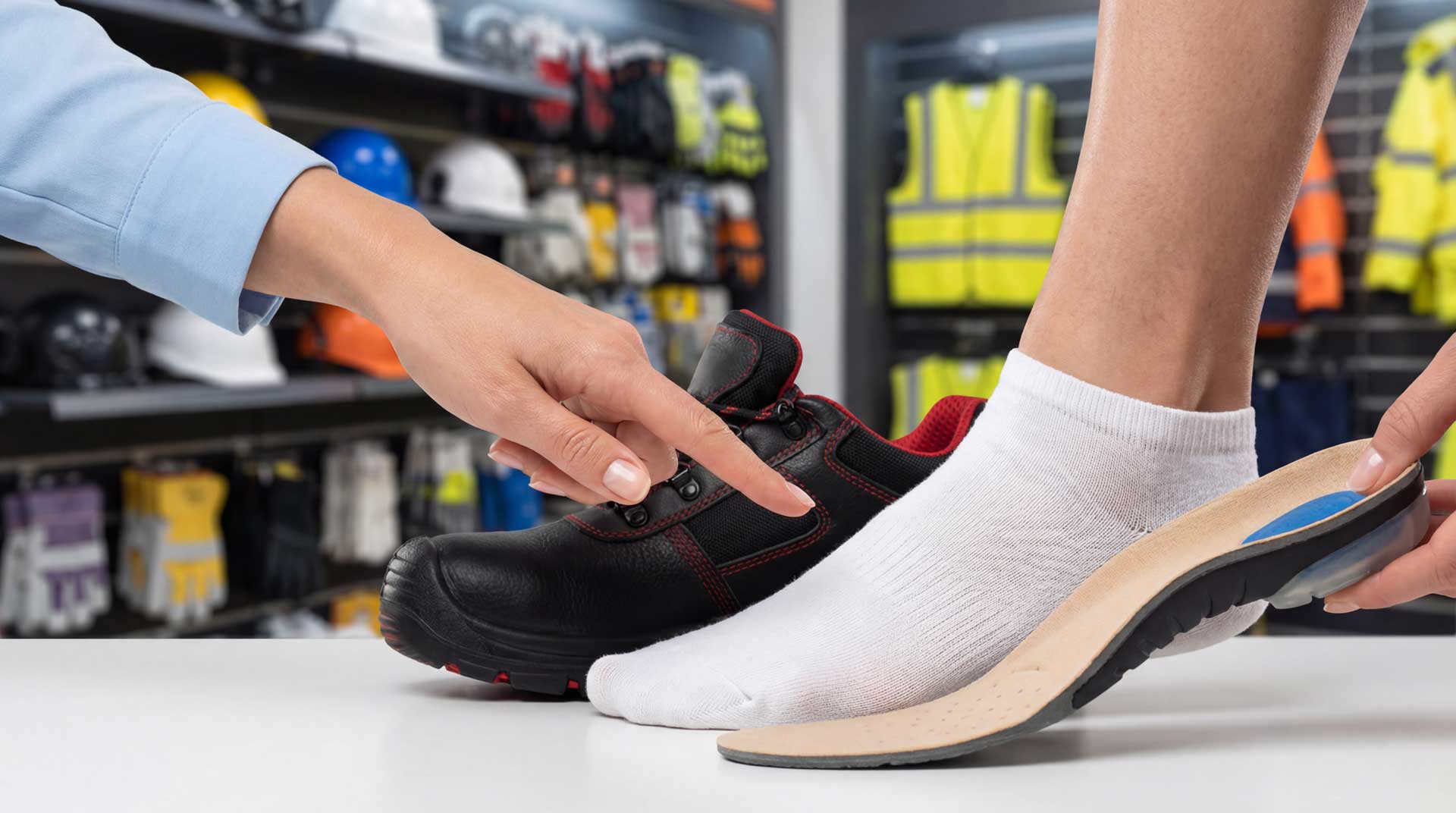
In summary, the protection professionals on this topic can say that S3 safety shoes offer good protection against water and moisture. However, they are not completely waterproof. S4 and S5 shoes, on the other hand, can ensure absolute waterproofing. Depending on the industry, activity and intended use, a shoe of the respective protection class should be used. Professional advice from a specialist dealer can help you choose the right safety shoe.