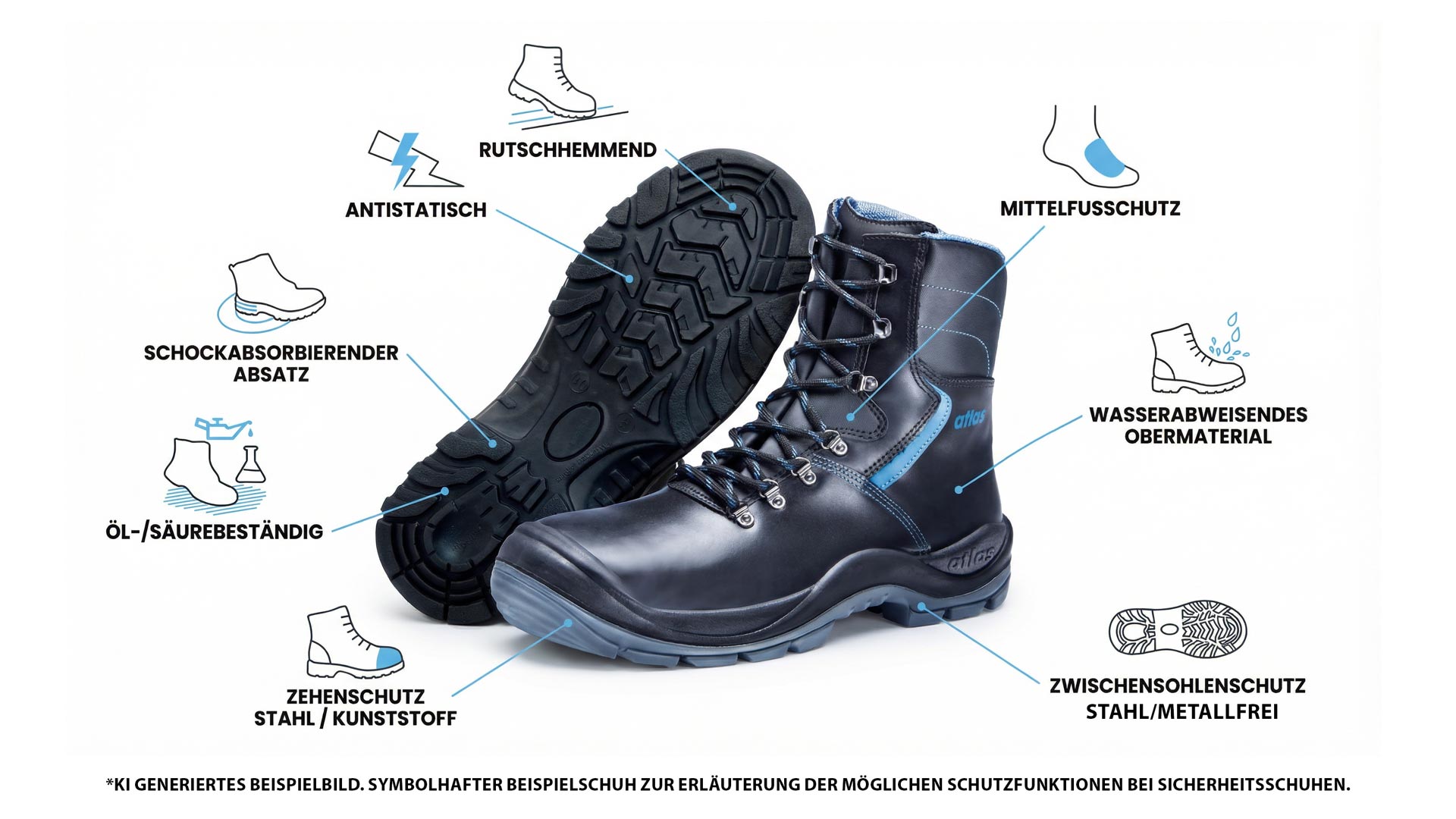
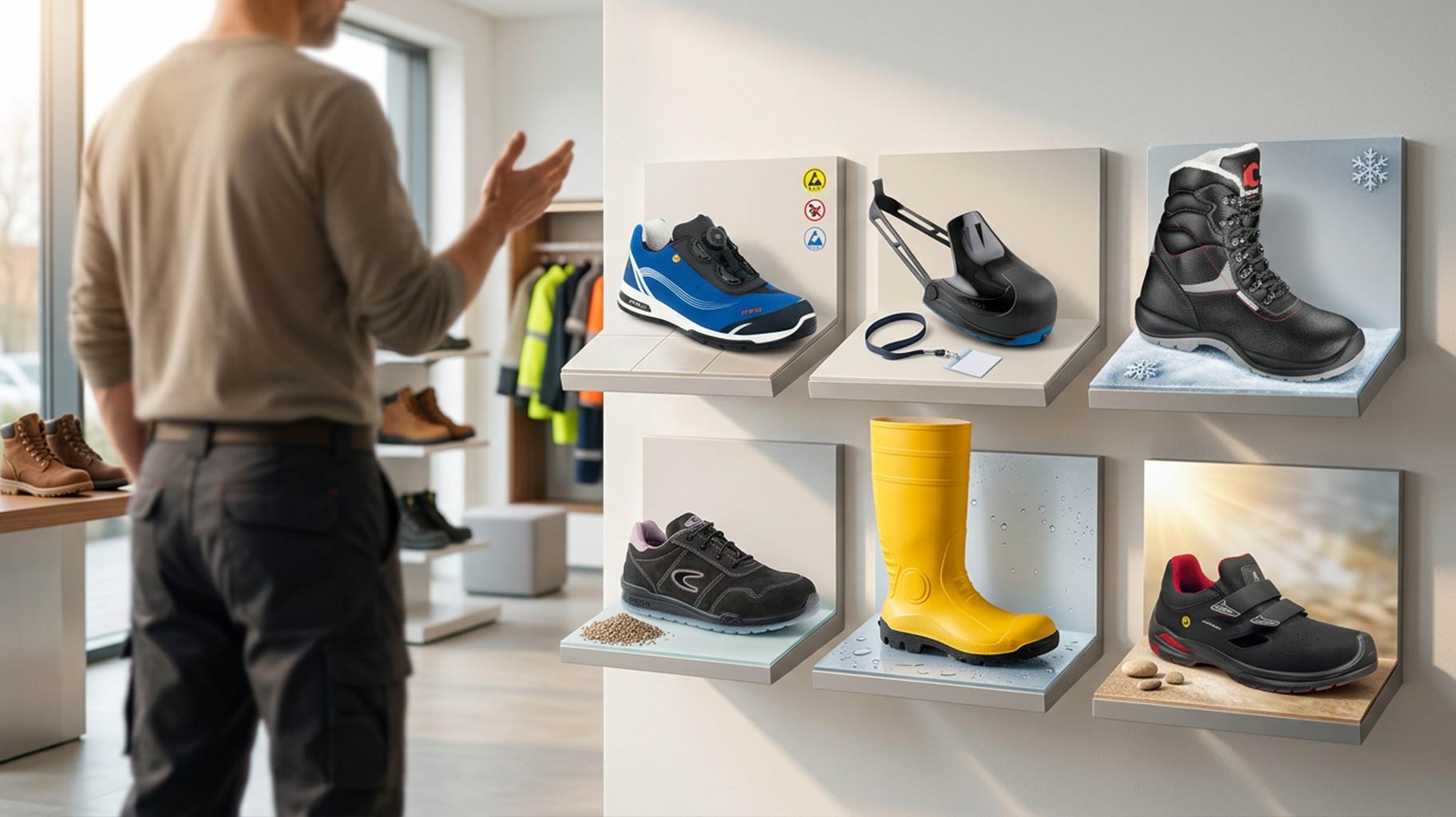
Egal ob im Labor, auf der Baustelle oder beim Heimwerken: Sicherheitsschuhe schützen dich zuverlässig vor Verletzungen. Die Kürzel S1 bis S7 geben an, welche Schutzfunktionen ein Modell bietet – von Antistatik bis Wasserdichtigkeit. Mit der EN ISO 20345:2022 wurden die Klassen modernisiert, erweitert und klarer definiert. Hier bekommst du einen verständlichen Überblick.
Die Grundlagen der EN ISO 20345:2022
Die EN ISO 20345 legt europaweit fest, wann ein Schuh als zertifizierter Sicherheitsschuh gilt. Alle Modelle müssen eine Zehenschutzkappe besitzen und je nach Schutzklasse zusätzliche Anforderungen erfüllen. Mit der Normversion von 2022 wurden vor allem die Vorgaben für den Durchtrittschutz aktualisiert:
- Kennzeichnung des verwendeten Durchtrittschutz-Materials (metallisch / nichtmetallisch)
- Angabe des Prüfnagel-Durchmessers (4,5 mm oder 3 mm)
- Mehr Transparenz für Einsatzbereiche und Belastbarkeit
Wichtig: Die Versionen 2011 und 2022 gelten parallel. Viele aktuell erhältliche Modelle sind noch nach der älteren Norm zertifiziert.
Schutzklassen im Überblick – S1 bis S7
| Schutzklasse | Neue Kennzeichnung | Typische Einsatzbereiche | Merkmale |
| S1 | S1 / S1P / S1PL / S1PS | Trockene Innenräume, Labor, Werkstatt | Zehenschutz, Antistatik, Energieaufnahme im Fersenbereich. Varianten mit P/PL/PS = Durchtrittschutz. |
| S2 | S2 / S2P / S2PL / S2PS | Pflege, Lebensmittelbereich, feuchte Innenräume | Wie S1 + wasserabweisendes Obermaterial (WRU). |
| S3 | S3 / S3S / S3L | Bau, Montage, Handwerk, Lager | Wie S2 + profilierte Sohle + Durchtrittschutz (P = metallisch 4,5 mm, PL = nichtmetallisch 4,5 mm, PS = nichtmetallisch 3 mm). |
| S4 | S4 | Landwirtschaft, Industrie, nasse Bereiche | Wie S1, aber komplett wasserdicht (Polymer- oder Gummistiefel). |
| S5 | S5 / S5PL / S5PS | Stark beanspruchte Umgebungen, Bau, Industrie | Wie S4 + Durchtrittschutz. |
| S6 | S6 | Außenbereiche, dauerfeuchte Umgebungen | Wie S2 + vollständige Wasserdichtigkeit (WR durch Membran). |
| S7 | S7 / S7S / S7L | Tiefbau, Straßenbau, Landwirtschaft | Wie S3 + WR. |
Zusatzkennzeichnungen – einfach erklärt
- CI – Kälteisolierung
- HRO – Hitzebeständige Sohle bis 300°C
- WRU – Wasserresistentes Obermaterial (ältere Kennzeichnung)
- WR – Dauerhaft wasserdicht (neu)
- ESD – Schutz vor elektrostatischer Entladung
- SR – Neue rutschhemmende Kennzeichnung (ersetzt SRA/SRB/SRC)
Hinweis: Die bisherigen Rutschhemmungen SRA, SRB und SRC sind nicht mehr gültig.
Orthopädische Anpassungen & individuelle Einlagen
Damit ein Sicherheitsschuh trotz Anpassung normkonform bleibt, muss er nach DGUV Regel 112-191 oder nach EN ISO 20345:2022 Anhang A zertifiziert sein. Nur solche Modelle dürfen orthopädisch verändert oder mit speziellen Einlegesohlen genutzt werden.
Praxisbeispiele – welche Schutzklasse passt zu deinem Job?
- Lebensmittelindustrie: S2 oder S3L – hygienisch, rutschhemmend, pflegeleicht
- Pflege & Gesundheit: S1 oder S2 – leicht, komfortabel, hygienisch
- Bau & Handwerk: S3 / S3L – robust, stabil, langlebig
- Landwirtschaft / Outdoor: S4 oder S5 – wasserdicht und kälteisolierend
- DIY & Hobby: S1P oder S3L – guter Rundumschutz im Alltag
Tipp: Achte auf Passform, Sohlenmaterial, Dämpfung und die Angabe zur Weite. Viele Hersteller bieten Modelle in extra breit oder orthopädisch anpassbar.
Lebensdauer, Pflege & Nachhaltigkeit
Hochwertige Sicherheitsschuhe halten länger und sind nachhaltiger im Einsatz. Für eine lange Lebensdauer gilt:
- Schuhe trocken lagern – nicht auf der Heizung
- Regelmäßig reinigen und Sohlen kontrollieren
- Einlegesohlen austauschen für Hygiene und Dämpfung
- Reparaturen nur durch zertifizierte Fachbetriebe
Fazit
Wenn du die Schutzklassen kennst, findest du genau den Schuh, der zu deinem Einsatz passt. Achte auf Komfort, Passform und die aktuelle EN ISO 20345:2022. Sicherheit beginnt mit Wissen – und endet mit dem richtigen Schritt.
Schütz dich. Lieb dich.