
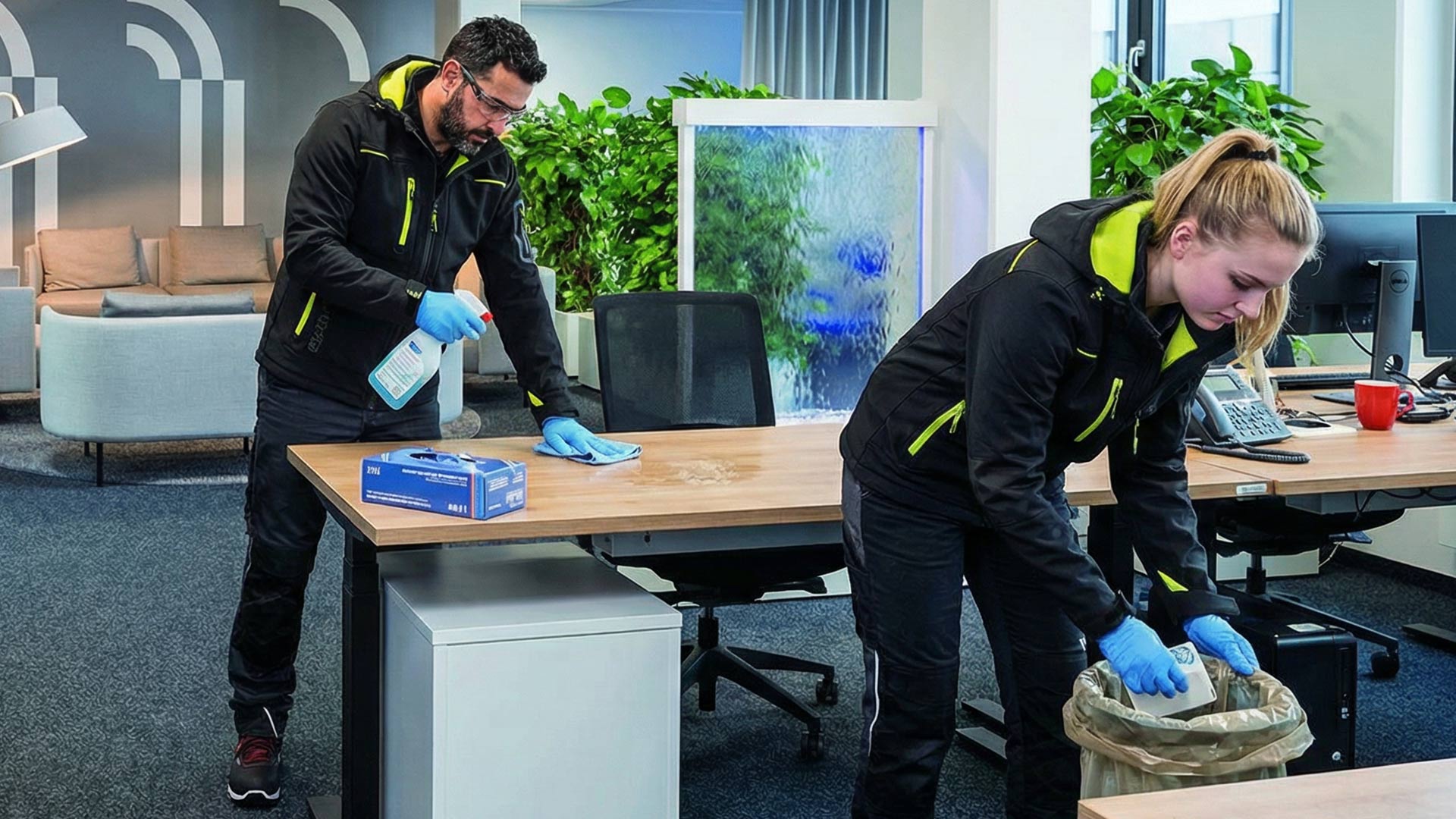

The care of protective clothing is much more complicated than employers and users often imagine. Washing alone is not enough, but there is much more to consider when caring for it. What do you have to do to maintain the protective properties of the protective clothing after use? The protective professionals report in detail in this blog post so that you can enjoy your protective clothing for as long as possible.
Washing protective clothing – observe EN standards
Protective clothing is certified according to EN standards and must comply with these properties in terms of use and protective properties even after cleaning and care of the clothing. Properties such as flame retardancy, heat protection, reflective properties, antistatic, tightness in wet and cold weather, hygiene properties and many more must be retained even after the care process. Special applications are a special chapter, cleanroom and fire brigade, metalworking at high temperatures should be mentioned.
Washing protective clothing – follow the manufacturer's instructions
The protective properties in accordance with the standard must be maintained. If they cannot do this, the protective clothing must be replaced, as it can then no longer fulfil its purpose, namely its protective effect. The manufacturers of protective clothing do a lot here to maintain the protective effect for as long as possible, if only for economic reasons.
Manufacturers of protective clothing indicate how to clean and care for it. Manufacturers often stipulate that no chlorine-containing bleaches or oxygen bleach, as well as fabric softeners, may not be used. Proceeding without taking this information to heart means taking a high risk, namely that the clothing may have lost its protective effect afterwards.
Washing protective clothing – varies depending on the intended use
Example welding clothing:
If, for example, welding clothing is made of Proban fabric, it can remain flame-resistant even after frequent washing (according to the manufacturer's instructions). How clothing made of probanese fabric can be washed is determined by the manufacturer of the garment. A typical example is the statement: "permanently flame-resistant if the washing instructions are observed".
Example: High-visibility clothing:
Depending on the choice of reflective material used, the manufacturer can set a number of washing cycles (e.g. 50) without the material losing its protective function after washing. This only applies if the manufacturer's washing instructions are followed exactly! Washing temperatures that are too high can cause reflective strips of high-visibility clothing to lose their luminosity, also due to the mechanical stress on the reflective strip during the washing process. It is possible to measure the reflective properties of the reflective strips after each wash. However, it is understandable that such a requirement cannot be met at all when washing at home and is difficult even in many industrial laundries. Testing at the manufacturer or a certified testing institute is often also difficult due to the effort involved and the associated high costs.
Washing protective clothing – pay attention to special features
If the garment has an impregnation, it must be renewed (if necessary according to the manufacturer's instructions) after the washing process. Another problem is that if the washing temperature is unsuitable and too high, increased shrinkage can occur, which makes the garment unusable for the wearer.
As you can see, there are many more special features to consider than an untrained user imagines. These must be observed, both when washing in the domestic washing machine and when doing industrial laundry.
-
Washing protective clothing at home (household care)
According to various studies, it is a fact that in the vast majority of cases, clothes worn at work are washed at home in the domestic washing machine. There is nothing wrong with this, but it is important to follow the care instructions carefully. It is essential to pay attention to the washing temperature. The intended suitable detergent must also be used. Every manufacturer or retailer has certainly had to deal with complaints about clothing that has shrunk and where it is at least unclear how the part was washed beforehand. The degree of soiling and, above all, the type of soiling (e.g. oil) is also important in the procedure of laundry care. The care instructions are supplied with the garment and a pictogram is regularly sewn into the garment itself. Worn parts and parts in need of repair can no longer protect the wearer and must be sorted out and replaced with new protective clothing.
The conditions of care are specified in the EN 6330:2013 standard. The marking is carried out in accordance with EN 3758:2012 in the label of the garment. -
Commercial Industrial Laundry
Heavily soiled and contaminated protective clothing requires special care. In this case, it is not a good idea to wash such laundry in the domestic washing machine. For laundry contaminated with infectious agents, there are requirements from the Robert Koch Institute (RKI) for the hygiene of laundry from health service facilities, which commercial laundries must adhere to. If necessary, disinfection must be used in a disinfecting washing process according to a list of the RKI on the basis of recommendations of the clothing manufacturer. Industrial laundries are also equipped for the impregnation of protective clothing and also for repair work. The design of the clothing must then be such that it meets the requirements of industrial reprocessing. The washing process must therefore be adapted to the clothing. This is the only way to maintain the protective function. The normative requirements are laid down in EN 15797:2018 and are also indicated in the label of the garment according to EN 30023:2012.