
In many professions, it is imperative that they are not allowed to work because of a wide variety of hazards. Wear safety shoes . Nowadays, safety shoes are available on the market in many different variants and qualities, but all of them must be tested in accordance with the respective standard.
Tested safety even for foot problems
As various studies show, unfortunately over 50% of the adult population suffers from foot problems. As a rule, knee, hip and back problems are related to foot diseases. Since the foot is the foundation of our body, pain usually results from misalignments such as kinked, flat, splay or hollow feet as well as the resulting negative changes in the muscle and limb chain. Often, even small aids such as orthopedic insoles help to alleviate these symptoms.
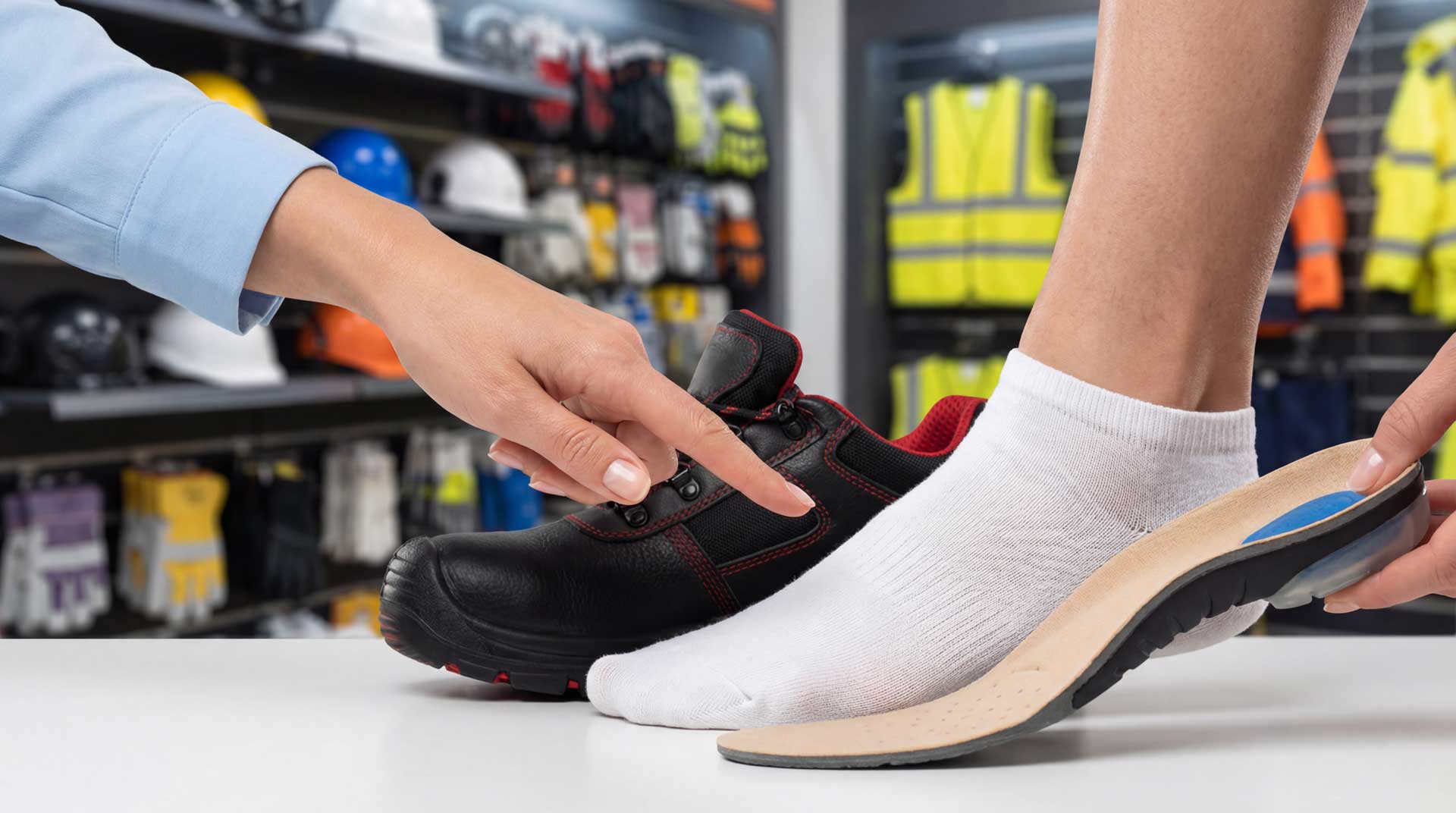
Insoles for safety shoes
Since 2007, the BG regulation DGUV 112-191 (formerly BGR 191) has stipulated that orthopaedic insoles may only be inserted into safety shoes in conjunction with a valid type examination so that they continue to comply with the EN ISO 20345 standard. If you are looking for safety shoes where you can insert custom-made orthopedic insoles, you can seek advice from occupational health and safety dealers. Various models from the brands Sixton or Lemaitre have the corresponding type examination certificate.
Special shoes for special feet
From Lemaitre, the Models Andy from the GERMAX series for the insertion of orthopedic insoles of the Springer system. From the brand Sixton are, for example, the popular models Land , Labrador and Montauk for Matthias Hartmann's insoles. The shoes according to the EN ISO 20345 standard are then indicated with a label such as S1, S1P, S2 or S3.