

What to look for when buying insoles for safety shoes
When buying safety shoes or work shoes, the product description often states that the shoes are certified according to DGUV Rule 112-191. But what does this DGUV rule mean exactly? And what does this certification for work shoes include? You will find out in this blog post from omniprotect.de.
Orthopedic insoles? Does that help me?
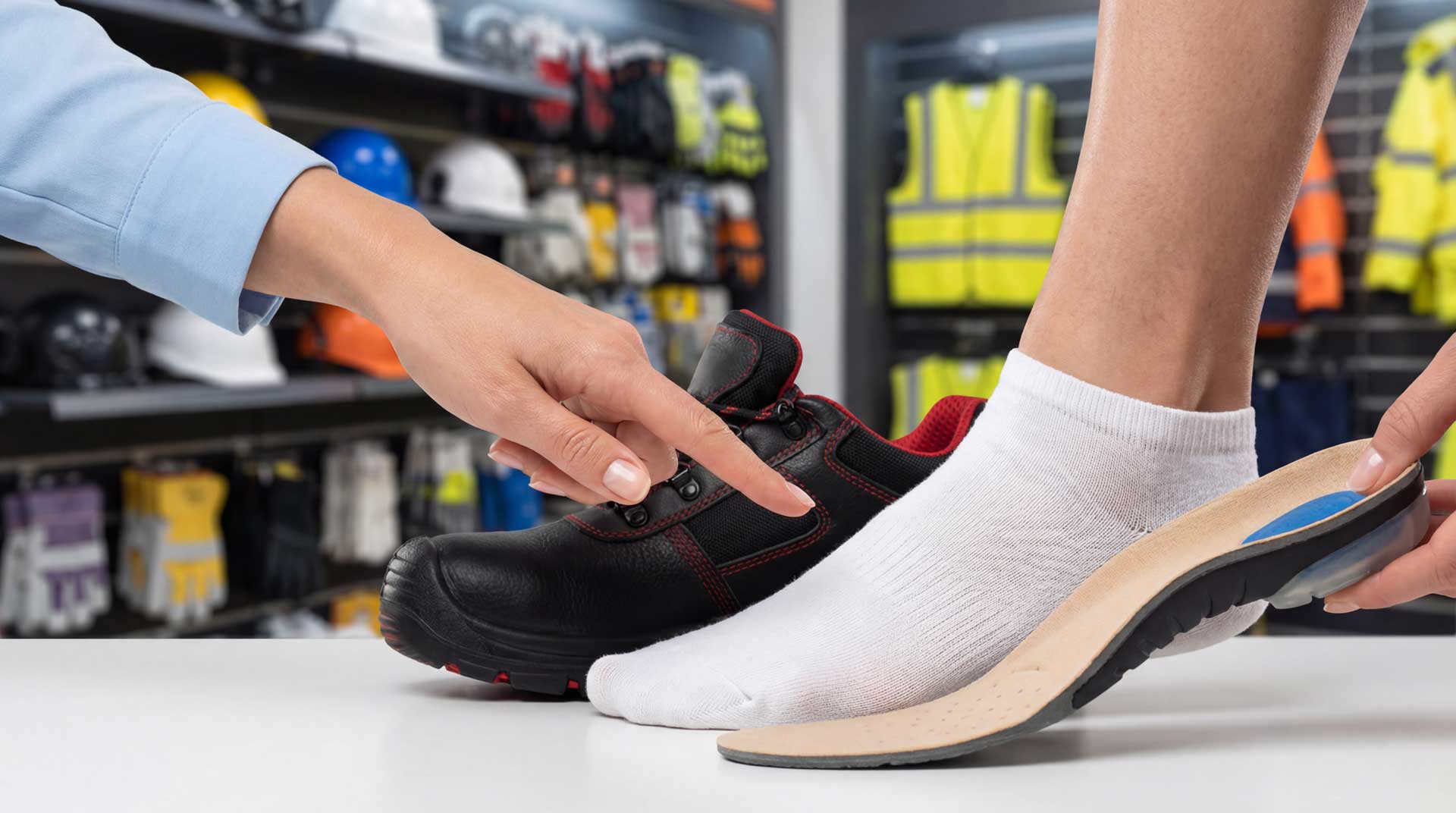
Unfortunately, there are many people who have problems with their feet. Fortunately, there are many (medical) aids that can solve these problems or relieve at least pain. An example of this are insoles specially adapted to your own foot, which are prescribed by an orthopedist. These orthopaedic insoles help, for example, with a correct foot posture and support the foot even on long working days. These orthopedic insoles are simply placed in the street shoe and off you go! But is this also the case with safety shoes?
Not every insole may be used in safety shoes
No! This is not so simple with safety shoes. Orthopaedic insoles may only be worn in safety shoes if the shoes are certified in accordance with DGUV rule 112-191. The DGUV rule 112-191 is a guideline that originated in Germany and specifies the necessary properties of a safety shoe so that the shoe can retain CE certification in the event of orthopaedic adjustment.
What exactly are unaudited deposits?
Any insole that is not certified in accordance with DGUV Rule 112-191 in conjunction with the work shoe is an untested insole. As a matter of principle, this may not be worn in safety shoes, as this will void the insurance cover of the statutory accident insurance. A few examples:
- Any insole you buy at retail or take out of any shoe
- Newspaper for stuffing
- Odour stopper Shoe insoles and soles with activated carbon
DGUV rule 112-191 is there for your protection! All work shoes and safety shoes are tested for their protective properties before they are placed on the market. After passing the exam, they are certified accordingly. With every change they make to a shoe, the product characteristics change and the certification expires. This is comparable to the unauthorized opening of devices. As is well known, this then leads to a loss of warranty.
What does an untested insole change in safety shoes?
1.) The insulating and conductivity of the safety shoes
This means that if sparks are generated, it becomes dangerous in potentially explosive rooms. The interaction of the individual components of the shoe is no longer correctly coordinated, which means that certified protection can no longer be guaranteed.
2.) The distance between the toes and the protective cap
If the insole reduces the distance between the toes and the toe cap in the work shoe, this also reduces the time before the foot or toes are crushed. This distance is specified by the DIN EN ISO 20345 standard and must not be changed by a non-certified insole.
An orthopaedic insole may only be used if it is certified together with the work shoe by the testing body in accordance with DGUV rule 112-191. This is always listed in the product description of the article.
The process
- Order in the Omniprotect online shop for a safety shoe that is marked with the reference DGUV 112-191.
- Inform your local orthopaedic shoemaker of your desire for a change and/or give them the doctor's prescription with the fitting instructions, together with the selected shoe model.
- Your orthopaedic shoemaker will contact the manufacturer's respective partner for the supply of DGUV 112-191 certified insoles.
- Your orthopaedic shoemaker will check and implement the orthopaedic adjustments and provide you with the modified shoe after settlement.
- The adapted shoe meets the prescribed safety standards.
- The purchase of orthopaedic footwear can be subsidised by various cost bearers (but not by the statutory health insurance companies). Unfortunately, this is not regulated nationwide.
IMPORTANT NOTE:
If a safety shoe has been altered according to the doctor's instructions by an orthopaedic shoemaker, this shoe may only be used by the person concerned. Any misuse by third parties must be strictly avoided