Minderwertige Nitrilhandschuhe – Worauf sollte der Anwender achten?
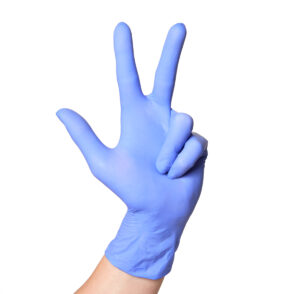
In Pandemie-Zeiten tauchen alle möglichen Glücksritter plötzlich wie aus dem Nichts auf und bieten den verdutzten Kunden Untersuchungshandschuhe zu unglaublichen (günstigen) Preisen an. Da der günstige Einkaufspreis immer ein starkes Argument ist, kaufen erstaunlich viele Abnehmer solche Ware. Aber was ist mit der Qualität der Handschuhe? Meist folgt die Enttäuschung schon kurze Zeit nach dem Kauf.
Vergleichbar wie Entscheidungsträger aus Unkenntnis auf minderwertige und gefälschte Schutzprodukte hereinfallen, ist vergleichbar die weithin bekannte Situation bei Corona-Atemschutzmasken. Hier war aufgrund des knappen Angebots zu Beginn des Jahres 2020 jeglichem Betrug Tür und Tor geöffnet. Es wurden minderwertige Masken, aus ungeeignetem Material ohne jegliche Erfahrung produziert, nicht nur in China, sondern ebenso in Europa (häufig mit gefälschten Zertifikaten). Früher oder später kamen dann die Qualitätsmängel der ungeeigneten Produkte zum Vorschein. Das darauffolgende Desaster und der Katzenjammer lassen sich in vielen Publikationen nachlesen. Muss das gleiche Ungemach nun auch bei Untersuchungshandschuhen passieren? Im Folgenden soll näher auf die Problematik, vor allem bei Nitrilhandschuhen eingegangen werden.
Als Pionier der Entwicklung hochwertiger Einweghandschuhe auf Basis von Nitril („N-Dex“) gilt die amerikanische Firma Best (jetzt zu Showa gehörend). Obwohl N-Dex lange Zeit eine marktführende Position einnahm, hat vor allem der auch bei anderen Marktteilnehmern erhöhte Druck auf das zu jener Zeit volumenmäßig größte Marktsegment der Hersteller von Einmalhandschuhen auf Basis von Naturlatex zur Innovation bei Nitrilhandschuhen geführt. Von der Vielzahl seinerzeit gestarteter Unternehmen sind von Hunderten nur wenige (Dutzend) übriggeblieben. Grund ist die Notwendigkeit der Entwicklung anspruchsvoller, hochwertiger Technologie, ein hoher Investitionsbedarf in die Produktion und später auch die Notwendigkeit eines immer herausfordernderes Kostenmanagement und Automatisierung.
Welche Bedeutung hat die Technologie beim gegenwärtigen Marktangebot von Nitrilhandschuhen?
Kurze Antwort: eine sehr große! Die Nachfrage ist sprunghaft gestiegen. Das hat dazu geführt, dass etliche Anbieter mit minderwertiger Technologie in den Markt drängen und folglich zu qualitativ schlechten Handschuhen. Die Vermutung besteht, dass die Handschuhe zumindest nicht der Qualitätskontrolle unterworfen wurden, welche die einschlägigen Normen zwingend fordern. Häufig ist die einfache Erklärung dafür, dass den neuen Marktteilnehmern ganz einfach die technologische Erfahrung für die Herstellung hochwertiger Handschuhe fehlt. Diese technisch minderwertigen Nitrilhandschuhe werden dann in Märkte verkauft, in denen scheinbar die Qualität keine Rolle spielt, wohl aber der niedrige Preis.
Wirkt sich die Rohstoffqualität auf die Qualität der Handschuhe aus?
Kurze Antwort: ja, in hohem Maße! Nitril-Butyl-Kautschuk in Form einer Dispersion ist der Rohstoff, aus dem Nitrilhandschuhe gefertigt werden. Wegen der enormen Nachfrage nach Nitrilhandschuhen ist auch der Preis dieses entscheidenden Rohstoffs erheblich gestiegen. Es ist begreiflich, dass unerfahrene Hersteller hier nach Auswegen suchen. Zu beobachten ist, dass ein erster, scheinbarer Ausweg dafür ist, das hochwertiges Handschuh-geeignetes Nitril aus Kostengründen durch minderwertiges Nitril zu ersetzen, entweder komplett oder zumindest teilweise. Das geschieht häufig durch Beimengung anderer, billigerer Polymerer. Zusätzlich werden aus Kostengründen bei den neuen Billiganbietern regelmäßig Kieselsäure- und kalkhaltige Füllmaterialien verwendet, wodurch der Nitrilanteil sinkt. Selbst ein unvoreingenommener Anwender wird sehr schnell feststellen, dass die notwendige Schutzwirkung des Handschuhs niemals erreicht wird. Handschuhe erfüllen nicht mehr die Grundvoraussetzung, nämlich die der Barrierewirkung. Handschuhe reißen leichter, oftmals schon beim Anziehen. Kurzum, die Handschuhe erfüllen nicht mehr den Zweck, zu dem sie angeschafft wurden, im Gegenteil, sie gefährden den Anwender. Wer möchte sich in Coronazeiten aus Fahrlässigkeit und Unkenntnis schon gern einer Infektion aussetzen, und das nur, weil ein Produkt etwas billiger ist?
Gefälschte Zertifikate und andere Betrügereien. Was tun?
Hat man ein verdächtiges Produkt erworben, so ist es meist zu spät. Die Überprüfung der Zertifikate gibt jedoch wichtige Hinweise, um zukünftige Fehler zu vermeiden. Bei einem Verdacht gibt Nachfrage beim Inhaber des Zertifikats Aufklärung. Der Ursprung der Betrügereien liegt meist bereits in den bekannten Herstellerländern in Fernost. Neben an sich bereits minderwertiger Ware wird sogenannte „B-Ware“ umgepackt und in betrügerischer Weise mit Zertifikaten von Markenherstellern versehen. Namen einer bekannt gewordenen Auswahl an Nitrilhandschuhen mit gefälschten Zertifikaten sind: u. a. Panyos, Pure Glove, Vasco Guard und viele andere mehr. Man kann hier nur sagen: Hände weg von derartig verdächtigen sowie als gefälscht bekannten Produkten.
Es werden auch Handschuhe aus Mischungen von Vinyl (d. h. aus PVC) mit einem mittleren, jedoch oftmals nur einem „homöopathischen“ Anteil an Nitril als „Nitrilhandschuhe“ angeboten. Diese Handschuhe haben mit den Marken-Nitrilhandschuhen nichts zu tun und Verkäufer sind eher darauf aus, den Anwender zu täuschen. Jeder Handschuh-Experte weiß aber, dass Vinylhandschuhe im Gegensatz zu Nitrilhandschuhen z. B. ungeeignet für den Umgang mit ölhaltigen Lebensmitteln sind. An dieser Tatsache ändert auch ein gewisser Nitrilzusatz zum Vinyl nichts. Auch für den Verkauf von Gebäck (häufig fetthaltig) sind solche Handschuhe komplett ungeeignet. Der aus technischen Gründen immer im Vinylanteil solcher Handschuhe vorhandene Weichmacher würde bei Kontakt in das Fett des Gebäcks migrieren und dem Handschuh folglich die Lebensmitteleignung für derartige Anwendungen nehmen.
Anmerkung: dennoch sieht man in Bäckerei-Verkaufsstellen überwiegend Vinylhandschuhe (die für solche Anwendungen komplett ungeeignet sind).
Worauf kann man sich verlassen?
Handschuhe bekannter Hersteller in Originalverpackung sind die einzige sichere Lösung. Eine lange Erfahrung in Kautschuk-Technologie gibt hier bereits ein deutliches Signal. Beispielhaft soll hier (neben anderen) die Firma Semperit genannt werden. Man hat 200 Jahre Erfahrung in Kautschuktechnologie und 100 Jahre Erfahrung in der Handschuhherstellung. Es ist verständlich, dass ein solcher Markenanbieter mit eigenen Produktionen von Nitrilhandschuhen für den medizinischen und den industriellen Bereich sich keinerlei Kompromisse bei der Qualität leistet. Handschuhe erfüllen durch permanente Qualitätskontrolle höchste Qualitätsstandards. Ständige Neu- und Weiterentwicklungen gewährleisten für den Anwender die Sicherheit, die er erwartet. Jeder wird verstehen, dass für Markenprodukte der Preis nicht das einzige Entscheidungskriterium sein kann, sondern auch die Qualität. Preise mögen etwas höher liegen als bei No-Name-Produkten, jedoch geben Qualitätsprodukte dem Anwender die Sicherheit, die er benötigt und verdient. Kaufen Sie Markenprodukte in der Originalverpackung!